
- EXPLORE FURTHER: Experts sound alarm over imminent 'Ultra-intense Category 6' hurricane
Meteorologists have identified a storm system along the coastline. Florida , raising concerns that the "disruption" might indicate another severe hurricane season is approaching.
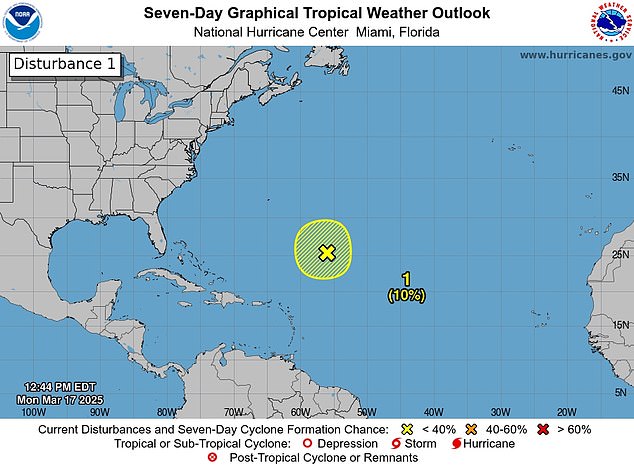
On Monday, the National Hurricane Center (NHC) monitored the disturbance in the Caribbean Sea, which was generating gale-force winds along with heavy rainfall and thunderstorms.
The initial phase of a storm transforming into a hurricane is called a disturbance.
Although the system vanished on Tuesday, the NHC stated this occurrence. is a reminder that the start of the Atlantic hurricane season is less than three months away.
The 2024 hurricane season observed 18 named storms in the Atlantic, with five of them being classified as major hurricanes. Over 200 individuals lost their lives due to storms in the previous year. .
Meteorologists forecast 'an almost average Atlantic hurricane season extending until September,' expecting around 12 named storms and approximately five hurricanes for this year.
The 2025 hurricane season begins on June 1, with the storm named Andrea being the first on the list.
Although a disruption in March is uncommon, meteorologists stated that this does not indicate the level of activity expected for the approaching season.
While March generally doesn’t experience hurricanes, an unusual storm developed in 1908 and wreaked havoc across portions of the Caribbean.
Nevertheless, it stands as the sole instance recorded to strike several months prior to the official start of the season.
The disruption was observed approximately 700 miles northwest of the northern Leeward Islands.
'Additional development is not expected as it moves into an environment of strong upper-level winds and dry air tonight and Tuesday,' the NHC shared on X.
A large number of X users inundated the post with remarks, stating, "Here we go again."
Some were astonished to witness a storm at such an early date in the season.
"It's March! Head back home, Storm; you've had too much to drink!" a user from X remarked.
Earlier today, the NHC reported that the storm had weakened and dispersed.
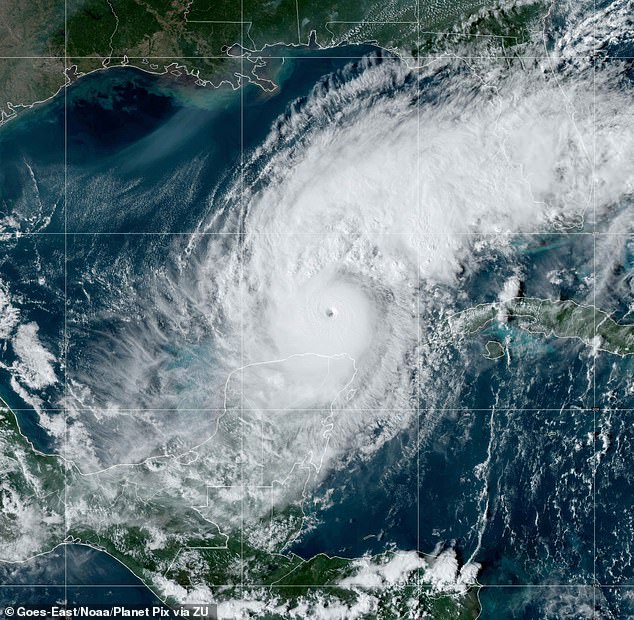
FOX meteorologists mentioned that it is uncommon for the NHC to release storm warnings so promptly; however, the satellite images of the disturbance might have been sufficient to trigger the alert.
"I believe primarily this is due to the fact that it appeared very similar to a possible tropical system yesterday," stated FOX Weather Hurricane Specialist Bryan Norcross.
Norcross mentioned that if the system had progressed into the warmer waters of the Caribbean, it might have developed into a stronger cyclone.
"If it were to shift direction in 1908 and head south towards the Caribbean, something that wasn’t predicted, it would encounter comparatively milder temperatures," he explained.
However, the water temperatures are dropping; the high-altitude winds are becoming more turbulent. Thus, that’s everything we’ll be hearing regarding this system, as such conditions are typical for this season.
Nevertheless, this is the first storm of its kind since the middle of the 2010s.
The Weather Channel analyzed 'every hurricane season during the satellite period—from 1966 to 2023—determining if each had at least one storm prior to June 1st.'
They discovered that seasons featuring at least one preseason storm released 'a an average of two to three additional storms.
'Meteorologists reported that the number of hurricanes and major hurricanes ( Categories 3 or higher ) remained nearly identical between seasons that began prematurely and those that did not,' they noted.
'Thus, not much valuable insight can be gained regarding the upcoming hurricane season based on whether or not there was a storm before June 1st.'
Last year, Florida was hit by three hurricanes: Milton, Helen, and Debby.
However, Milton stood as the fifth hurricane of the season and strengthened to Category 5 before making landfall on October 7.
' This rapid intensification was partly due to unprecedented to almost-unprecedented heat across the Gulf of Mexico, according to the National Oceanic and Atmospheric Administration (NOAA).
As the temperature of the sea increases, it provides more energy for hurricanes to strengthen, assuming that other weather conditions such as wind shear are conducive.
Helen struck land in September as a Category 4 hurricane, affecting areas up to North Carolina. Meanwhile, Debby made landfall in Florida as a Category 1 storm in August.
Read more
Our website uses cookies to improve your experience. Learn more